

Standardized onboarding
Guided steps collect required docs and info in one place.
- Contracts, insurance, certifications, tax forms
- Validation rules prevent incomplete submissions
This client runs a multi-region partner network. The work itself was not the issue. The issue was onboarding. Every partner came in with a different level of experience and different paperwork.
Internal teams were doing the same follow-ups over and over. Partners missed steps because emails got buried. Someone would ask, “Are they compliant yet” and the answer depended on who you asked. They wanted one system that keeps the process moving without babysitting it.
The priority was not to add complexity. It was to make onboarding predictable so the ops team can scale without adding headcount.
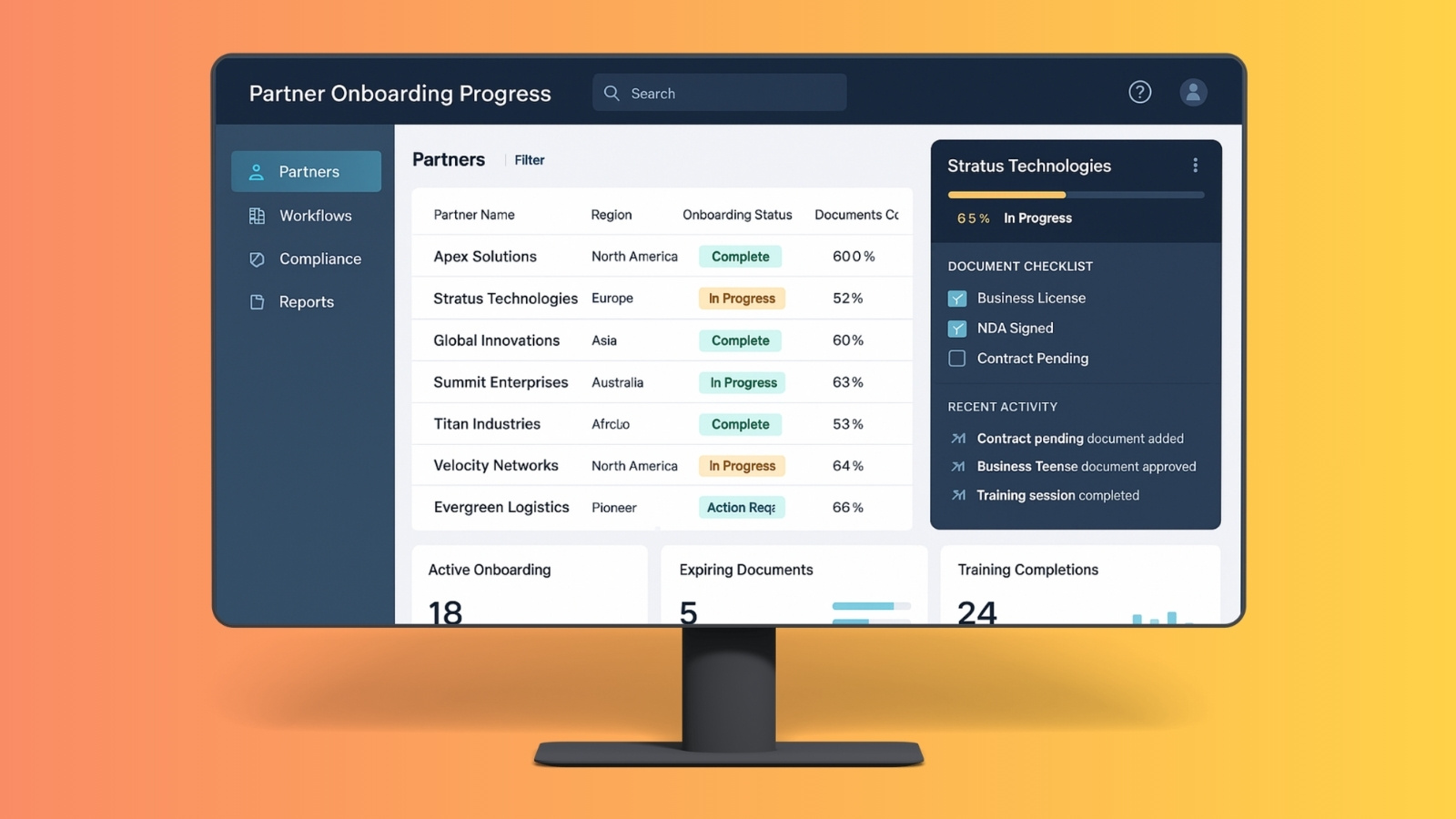
Onboarding was mostly email, PDFs, and shared folders. Training lived in random documents. Compliance was tracked in spreadsheets. It worked until the partner count increased, then everything slowed down.
They needed a platform that guides partners through the same steps every time, and gives admins a clean compliance view without hunting.
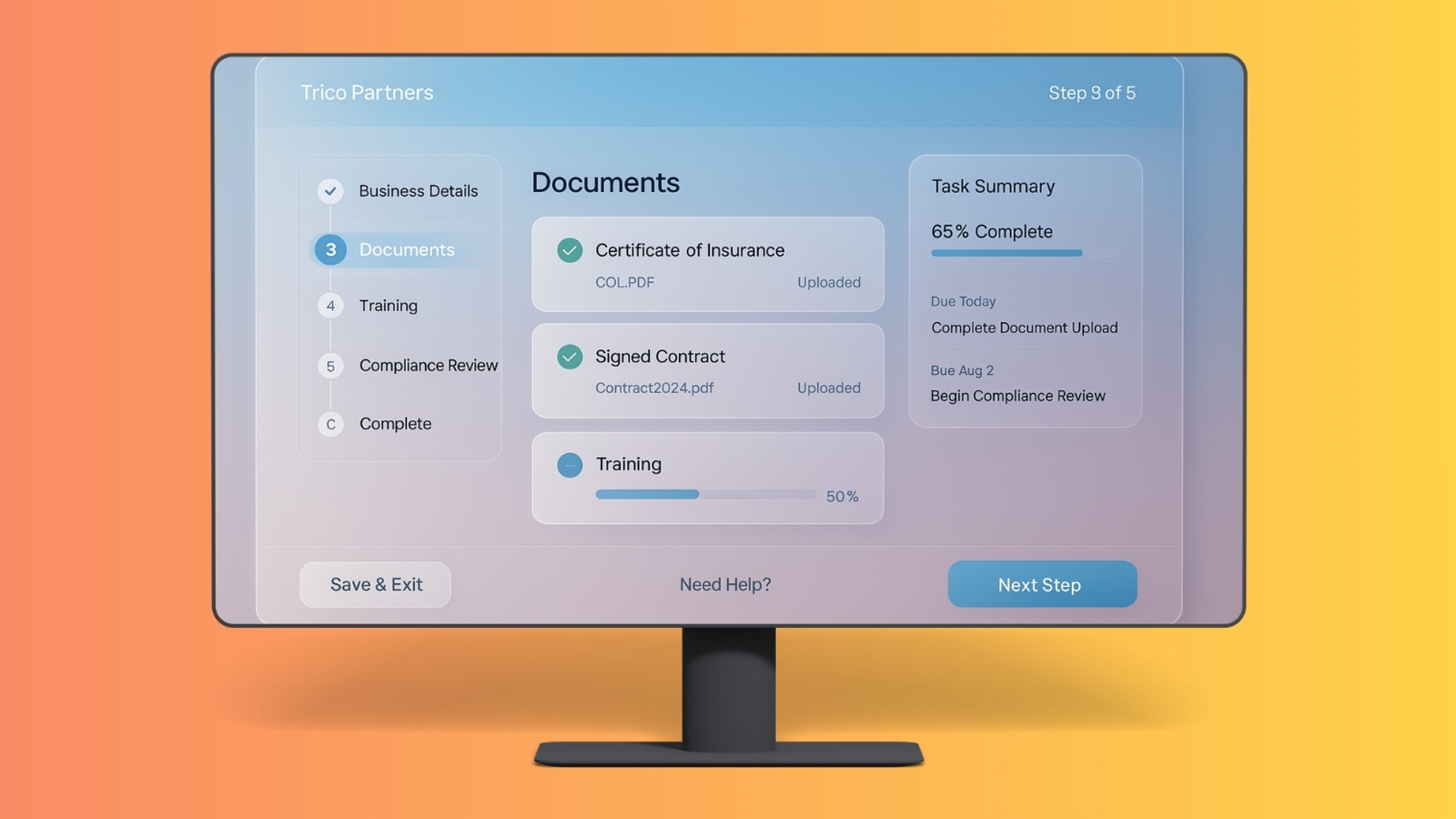
We built a centralized onboarding platform with clear steps, smart reminders, and built-in training. Partners get one link, one checklist, and clear status. Internal teams get the same view across regions and partner types.
The big goal was simple. Reduce back-and-forth and make compliance obvious before anyone gets activated.
Guided steps collect required docs and info in one place.
Tasks adapt by partner type with clear status.
Short modules and checks that prove completion.
A single view of risk, expiries, and missing items.
Permissions, self-service updates, and clean reporting.
We rolled this out with a pilot group across multiple regions. Some partners were very organized. Some had never used a proper onboarding portal before. The platform had to be simple enough that nobody needed hand-holding.
Result: fewer manual touches and predictable activation through standard flows.
Once the platform was stable, the next step was making it even easier to plug into existing systems. That means APIs, more language support, and smarter risk detection so compliance problems are caught early.
Client: Name Withheld — Distribution & service network