
Judge the process, not the pitch
Every firm has a polished deck and a list of logos. That tells you they can sell. What you need to know is how the project will run in week six, when something turns out harder than expected. The questions below get at that.
1. Who will you talk to
Ask who you speak with after the contract is signed. In some firms it is an account manager who relays messages to developers you never meet. Every relay adds delay and loses detail.
You want direct access to the people making decisions about your product.
2. Who owns the code
This should be a short conversation. You own it. Repositories, cloud accounts, design files and third-party subscriptions should be created under your organization from the start, not handed over at the end.
If a firm hosts everything in its own accounts, leaving becomes a negotiation.
Start here:
- Ask where the repository will live on day one.
- Ask whose name is on the cloud account.
- Get source code handoff written into the contract.
3. What you will see, and how often
A project that goes quiet for two months and then shows a finished product is a gamble. Ask for a working demo every week or two. Small, regular demos let you correct course while corrections are cheap.
Ask whether you will see a clickable prototype before any code is written. It is the fastest way to find out that you and the team pictured different things.
4. How the estimate was built
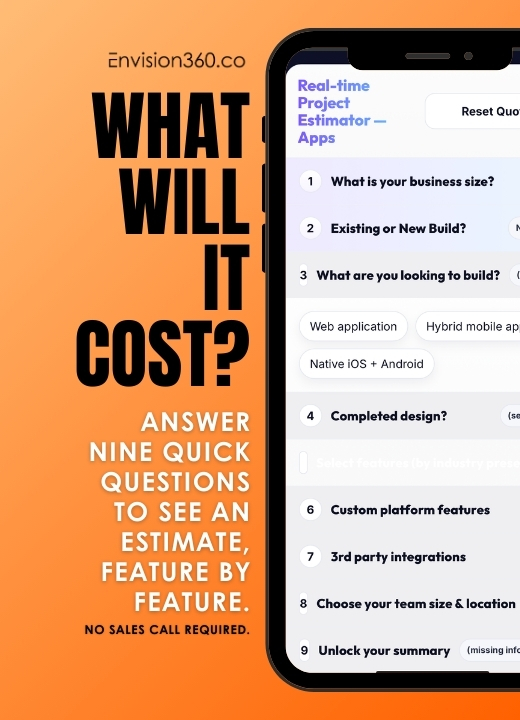
A single number tells you nothing. Ask for hours by feature, the team behind those hours, and the assumptions. Two quotes that look far apart often turn out to describe different projects.
5. How changes are handled
Scope will change. That is normal. What matters is whether there is a clear process for it. On a fixed-scope project, a change should produce a written change order with its cost and its effect on the date, before the work starts.
A firm that says changes are never a problem has not told you who pays for them.
6. How payments are tied to progress
Paying most of the fee up front removes your leverage. Payments tied to milestones, where each milestone is something you can see working, keep both sides honest.
7. What they have done in your kind of business
General experience matters less than experience with your constraints. A clinic app has privacy rules. A field service app has to work without a signal. Ask for a project with the same hard part as yours, and ask what went wrong on it.
If you handle health data, ask directly about HIPAA and whether they will sign a business associate agreement. If you take payments, ask about PCI.
8. What happens after launch
Software needs care once people use it. Ask what support looks like: response times, monitoring, security updates and who fixes a bug at 9 a.m. on a Monday. Ask what it costs before you need it.
Red flags
- A firm quote before anyone has asked how your business works.
- No named people on the proposal.
- Vague answers about code ownership.
- No mention of testing, security or support.
- Pressure to sign this week.